

Stress has quietly become part of everyday life. Deadlines, traffic, family responsibilities, screen time… it all adds up. As a dietitian, one question I hear all the time is simple: can food actually help calm the mind?
Hi, I’m Tapasya Mundhra, a Delhi based nutritionist and wellness coach, and this is a question I get asked often in my practice.
The answer is yes, and the science backs it up. What we eat directly affects our gut, our hormones, and even our brain chemistry. This connection between the gut and the brain is often called the gut brain axis, and it plays a bigger role in mood regulation than most people realize.
In this blog, I am sharing a practical, India friendly food list that can genuinely help reduce stress and anxiety, along with a few habits and drinks that support a calmer mind.
How Stress Affects the Body?
When we are stressed, the body releases cortisol, the primary stress hormone. In small doses, cortisol is helpful. It sharpens focus and keeps us alert. But when stress becomes chronic, cortisol levels stay elevated for too long, and that is when problems begin.
Some common effects of prolonged stress include:
- Poor sleep quality
- Digestive issues like bloating or acidity
- Increased cravings for sugar and processed food
- Low energy and brain fog
- Weakened immunity
Interestingly, most of these symptoms trace back to the gut. Around 90 percent of the body’s serotonin, the hormone linked to happiness and calm, is produced in the gut. So it makes sense that nourishing the gut through the right foods can genuinely support a calmer nervous system.
Chronically high cortisol doesn’t just affect mood, it can also stall your progress on the scale. Here’s how stress prevents weight loss.
Key Nutrients That Fight Stress and Anxiety
Before jumping into the food list, it helps to understand which nutrients actually do the work behind the scenes. Once you know these nutrients, choosing the right foods becomes a lot easier.
| Nutrient | Why It Helps | Common Indian Sources |
|---|---|---|
| Magnesium | Relaxes muscles and calms the nervous system | Spinach, almonds, pumpkin seeds, dark chocolate |
| Omega 3 fatty acids | Reduces inflammation linked to anxiety | Flaxseeds, walnuts, mustard oil |
| B Vitamins | Supports energy production and mood balance | Whole grains, lentils, eggs |
| Antioxidants | Protects brain cells from stress related damage | Berries, turmeric, green tea |
| Probiotics | Supports gut health and serotonin production | Curd, buttermilk, idli, dosa batter |
Probiotics don’t stop at curd and fermented foods. Some fruits pack a similar punch. Read which fruits are high in probiotics.
Indian Foods That Help Reduce Stress and Anxiety
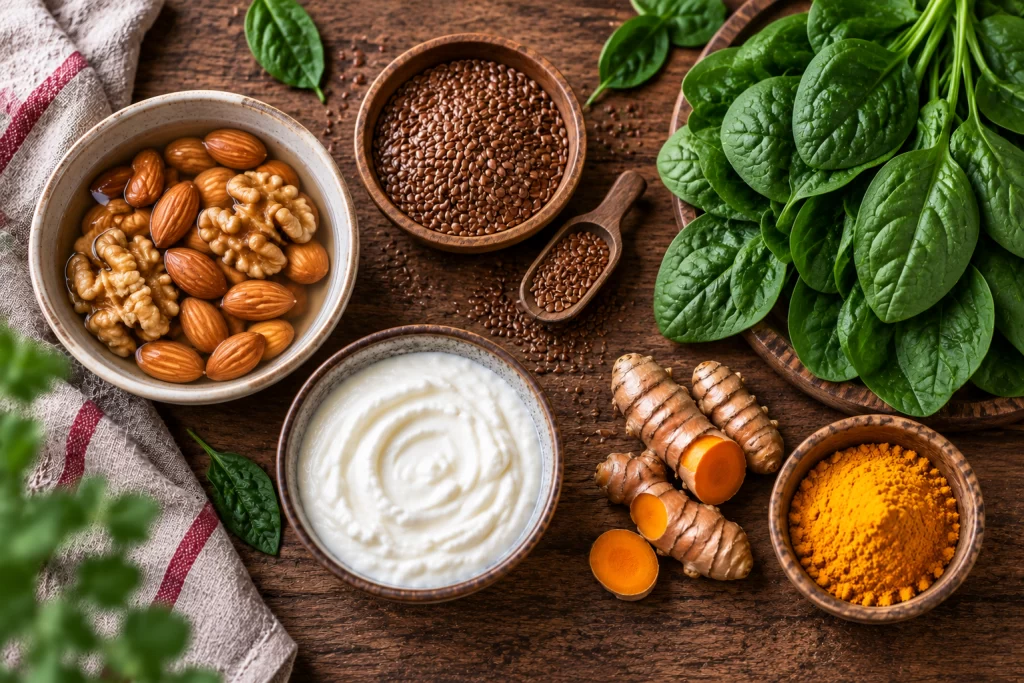
Here is a detailed, India specific food list that I recommend to almost every client dealing with stress or mild anxiety:
1. Nuts and Seeds
A small handful of almonds, walnuts, or pumpkin seeds makes an excellent stress relieving snack. They are rich in magnesium and healthy fats, both of which support a calmer mood. Flaxseeds are especially useful since they offer a good plant based source of omega 3s, which are otherwise limited in a vegetarian Indian diet.
2. Whole Grains
Oats, ragi, and brown rice help stabilize blood sugar levels. Since blood sugar crashes can trigger irritability and anxious feelings, choosing whole grains over refined flour keeps energy and mood steady throughout the day.
3. Leafy Greens
Spinach, methi, and moringa are packed with magnesium and folate. Folate deficiency has actually been linked to higher anxiety levels in several studies, making these greens an easy and affordable addition to daily meals.
4. Fermented Foods
Curd, buttermilk, idli, and dosa batter are naturally fermented and support a healthy gut microbiome. Since gut health is directly tied to mood regulation, including fermented foods in Indian diets is one of the simplest ways to support mental wellbeing.
5. Herbal Ingredients and Spices
This is where Ayurvedic foods for stress relief really shine.
- Ashwagandha helps the body adapt to stress and may lower cortisol levels
- Tulsi has calming properties and is traditionally used to ease anxiety
- Turmeric contains curcumin, known for its anti-inflammatory effects on the brain
- Chamomile, though not originally Indian, is now widely used and easily available
6. Fruits
Bananas are rich in potassium and vitamin B6, both known to support a calm nervous system. Oranges and berries provide antioxidants that help protect brain cells from stress-related damage.
Choosing fruits and vegetables that are in season also means fresher produce and better nutrient density. Here’s more on the power of seasonal eating.
7. Dals and Legumes
Moong dal, chana, and rajma are excellent sources of protein, fiber, and B vitamins. They keep you full for longer and prevent the blood sugar dips that often worsen anxious feelings.
8. Dark Chocolate
In moderation, dark chocolate with a high cocoa percentage can actually help lower stress hormones. It also contains magnesium, making it a guilt-free treat when eaten mindfully.
What Foods Calm Stress and Anxiety Instantly?
If you are looking for quick, on the spot options, these tend to work well:
- A banana with a few almonds
- Warm turmeric milk (haldi doodh)
- A small bowl of curd with flaxseeds
- Herbal tea with tulsi or chamomile
These are simple, easily available, and don’t require any special preparation.
What to Drink to Calm Anxiety?
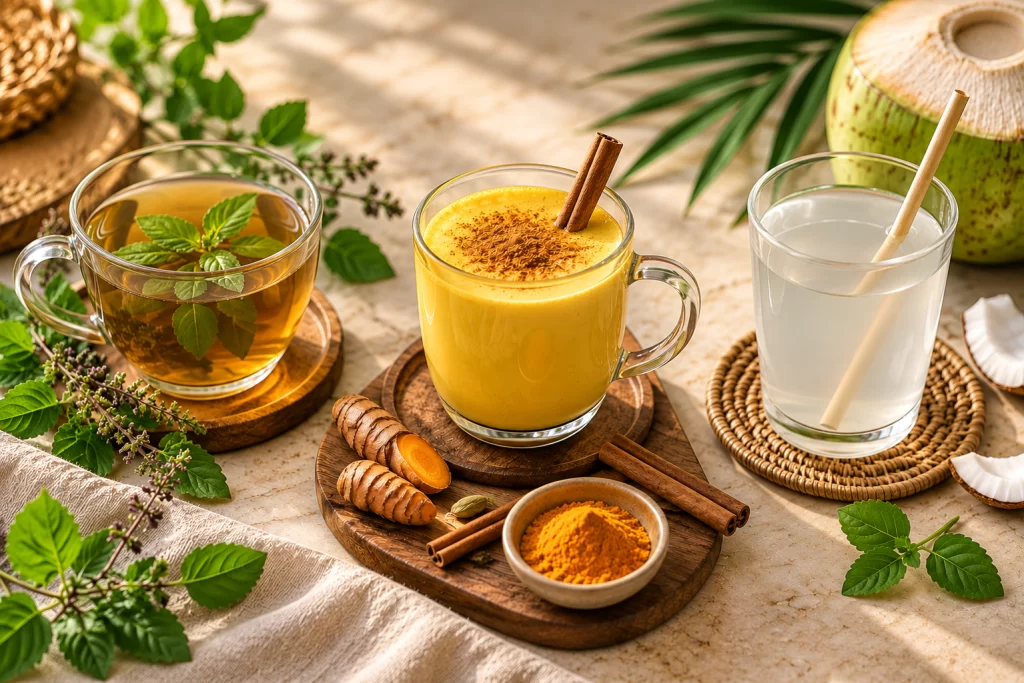
Drinks play a bigger role in managing stress than most people expect. Here are drinks that can help you:
| Drink | Benefit |
|---|---|
| Ashwagandha milk | Helps regulate cortisol levels |
| Tulsi tea | Calms the nervous system |
| Chamomile tea | Promotes relaxation and better sleep |
| Coconut water | Replenishes electrolytes and reduces fatigue |
| Warm turmeric milk | Anti-inflammatory and soothing before bed |
| Green tea (in moderation) | Contains L-theanine, which promotes calm alertness |
I usually suggest replacing at least one cup of regular tea or coffee with one of these calming alternatives, especially in the evening.
Foods and Habits to Avoid When Managing Stress
While adding the right foods helps, removing certain triggers matters just as much. Simply cutting back on these, even gradually, can make a noticeable difference within a few weeks:
| Avoid | Why |
|---|---|
| Excess caffeine | Can spike cortisol and worsen anxiety symptoms |
| Sugary and processed snacks | Cause blood sugar crashes leading to irritability |
| Deep fried food | Increases inflammation in the body |
| Alcohol | Disrupts sleep and worsens anxiety the next day |
| Skipping meals | Leads to blood sugar dips that mimic anxiety symptoms |
If you want a broader breakdown of what to eat and what to limit day to day, this Guide to healthy and unhealthy Indian foods is a good place to start.
10 Simple Ways to Reduce Stress
Diet works best when paired with a few daily habits. Here are ten practical ways to reduce stress that I often recommend alongside dietary changes:
- Start the day with a short walk or stretching session
- Eat meals at consistent times to keep blood sugar stable
- Limit caffeine after 2 pm
- Practice deep breathing for five minutes when overwhelmed
- Reduce screen time an hour before bed
- Stay hydrated throughout the day
- Include one calming drink like tulsi or chamomile tea daily
- Get at least seven hours of sleep
- Spend time outdoors, even briefly
- Journal or talk about stressful thoughts instead of holding them in
Sample One Day Indian Meal Plan for Stress Relief
| Meal | What to Eat |
|---|---|
| Morning | Warm water with soaked almonds and walnuts |
| Breakfast | Vegetable oats or ragi porridge |
| Mid Morning | A banana or a small bowl of papaya |
| Lunch | Moong dal, brown rice, sautéed spinach, and curd |
| Evening | Tulsi tea with roasted pumpkin seeds |
| Dinner | Light khichdi with vegetables |
| Before Bed | Warm turmeric milk |
This is just a template. Feel free to adjust based on personal taste and any existing health conditions.
Conclusion
Managing stress and anxiety through food is not about strict rules or giving up everything you enjoy. It is about making small, consistent choices that support your gut, your hormones, and ultimately your mind. Indian kitchens are already full of naturally calming ingredients like tulsi, turmeric, curd, and moong dal. Sometimes, the most effective changes are the simplest ones.
Start with one or two changes this week, maybe swapping your evening coffee for tulsi tea or adding a handful of nuts to your breakfast. Over time, these small shifts add up to a calmer, steadier version of you.
If you are dealing with ongoing stress or anxiety and want a diet plan tailored to your body, lifestyle, and daily routine, I would love to help.
And if stress isn’t your only concern, I also work with clients on a range of health goals, including diabetes management, thyroid health, weight loss, and PCOD, since these conditions are so often connected to the same lifestyle and dietary patterns.
Book a one-on-one consultation with me and let’s create a personalized nutrition plan that actually fits your life, not a generic template.
Frequently Asked Questions (FAQs)
Question: How long does it take for dietary changes to actually reduce anxiety symptoms?
Answer: Most people notice small shifts like better sleep or fewer energy crashes within 7 to 10 days, but real change in anxiety levels usually takes 4 to 6 weeks of consistent eating. The gut microbiome takes time to rebuild, so patience matters more than perfection here.
Question: Can eating too much protein or too little carbs actually increase anxiety?
Answer: Yes, and this surprises a lot of people. Very low carb diets can lower serotonin production since carbohydrates help transport tryptophan to the brain. If you have cut carbs drastically and noticed more irritability or anxious thoughts, that connection could be why.
Question: I already eat healthy but still feel anxious. What am I missing?
Answer: This usually comes down to meal timing rather than food choice. Long gaps between meals cause blood sugar dips that mimic anxiety symptoms, racing heart, shakiness, irritability. Even a well balanced diet will not help if meals are irregular or skipped.
Question: Does ashwagandha work for everyone, or are there people who should avoid it?
Answer: Ashwagandha is not suitable for everyone. People with thyroid conditions, autoimmune disorders, or those who are pregnant should consult a doctor before taking it, since it can affect hormone levels. It is best to introduce it gradually and monitor how your body responds.
Question: Is it the food itself or the act of eating mindfully that reduces stress?
Answer: Both play a role, but they work differently. The nutrients genuinely affect brain chemistry over time. However, eating slowly without distractions also activates the parasympathetic nervous system in the moment, which is why a calm meal can feel soothing even before any nutrient kicks in.
Tapasya Mundhra is a Clinical Dietitian and Wellness Consultant based in India, specializing in Nutrition for Weight Loss, Detox Diets, and Stress Management. With over 13 years of experience, she helps clients optimize their physical and mental well-being through personalized diet plans, moderate workouts, and holistic health strategies. Trusted by countless clients, she is dedicated to achieving sustainable health goals.