

I’m Tapasya Mundhra, a Delhi-based dietitian, and over the years I have worked with a fair number of people quietly dealing with autoimmune symptoms like joint pain, skin flare ups, and constant fatigue, and one pattern keeps showing up. Most of them have never connected their symptoms to what they eat every single day. That is usually where the autoimmune diet starts making a real difference.
An autoimmune diet is not about following a rigid Western meal plan that has no place in an Indian kitchen. It is about understanding which everyday foods might be quietly working against your body, and which ones can actually help calm the inflammation driving your symptoms.
In this blog, I want to walk you through a practical autoimmune diet plan for Indians, covering exactly what to eat, what to avoid, a full week’s meal plan, and answers to the questions I get asked most often in consultations. Just simple, easy to follow guidance you can actually use in your own kitchen.
What Exactly Is an Autoimmune Diet?
An autoimmune diet, also known as the Autoimmune Protocol or AIP diet, is an elimination based eating pattern designed to reduce inflammation and support gut healing in people with autoimmune conditions. It works on the idea that in autoimmune diseases, the immune system mistakenly attacks the body’s own tissues, and certain foods can make this attack worse by irritating the gut lining and increasing inflammation.
The diet works by removing suspected trigger foods for a period of time, then slowly reintroducing them one at a time to see how your body reacts. Think of it like a detective process for your plate.
This elimination approach is similar in spirit to detox diets, though the goal here is gut healing rather than a quick cleanse. If you want to understand how detox diets work more broadly, you can read my piece on Detox Diets.
Later in this blog, I will also walk you through a simple AIP diet food list you can actually use in an Indian kitchen.
Why Should Indians Follow a Different Version of This Diet?
Most autoimmune diet guides online are written with American or European kitchens in mind. They suggest zucchini noodles, almond flour pancakes, and bone broth as everyday staples. That is simply not how most Indian households eat.
An autoimmune diet plan for Indians needs to work around dal, roti, sabzi, and the spices we use daily. The good news is that Indian cooking already has several anti inflammatory ingredients built in. We just need to know what to keep and what to temporarily set aside.
The same thinking applies to other conditions rooted in inflammation and hormonal imbalance. If you are dealing with PCOD, you will find a similar Indian kitchen approach in my PCOD Diet Chart for Beginners.
Autoimmune Diet Foods to Eat and Avoid
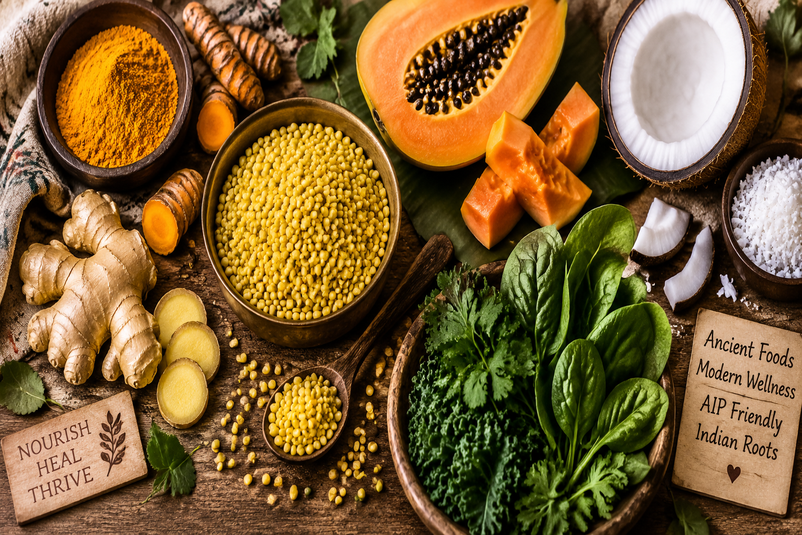
Let me lay this out clearly because I know this is the part you are here for. Think of this as your quick autoimmune diet food list for Indian kitchens:
Foods You Can Eat
| Food Category | What to Include |
|---|---|
| Vegetables | Bottle gourd, spinach, pumpkin, bhindi, carrots, beetroot |
| Fruits | Papaya, banana, pomegranate, berries, melons |
| Fats | Ghee, cold pressed coconut oil, mustard oil in moderation |
| Protein | Fish, eggs, chicken, moong dal for vegetarians |
| Fermented foods | Homemade curd, kanji, idli batter |
| Spices | Turmeric, ginger, cumin, coriander |
| Beverages | Herbal teas, warm water with turmeric, coconut water |
Foods to Avoid or Limit
| Food Category | What to Reduce |
|---|---|
| Grains | Wheat, refined rice, maida based items |
| Nightshades | Tomato, potato, brinjal, chili |
| Dairy | Milk, paneer, cheese for those sensitive |
| Legumes | Rajma, chana, most lentils in the strict phase |
| Processed foods | Packaged snacks, bakery items, refined sugar |
| Oils | Refined vegetable oils, hydrogenated fats |
I know cutting out tomato and potato feels almost impossible for Indian cooking. I struggled with this too when I first tried it. But there are simple swaps like using tamarind or beetroot for tang, and coconut flour or besan instead of maida.
What Is a 21 Day Autoimmune Diet Plan?
A 21 day autoimmune diet plan is a short term structured elimination phase. For three weeks, you remove the common trigger foods completely from your diet. This gives your gut lining time to heal and reduces the inflammatory load on your body.
Here is roughly how it breaks down.
- Week 1: Strict elimination of grains, dairy, legumes, nightshades, and processed foods
- Week 2: Continue elimination while introducing more variety in vegetables and healthy fats
- Week 3: Monitor symptoms closely and prepare for the reintroduction phase
Three weeks is not a magic number, but it is often enough time for people to notice a difference in energy, digestion, and skin. After this, foods are reintroduced one at a time, waiting a few days between each to track any reaction.
Sample Indian Meal Plan for a Week
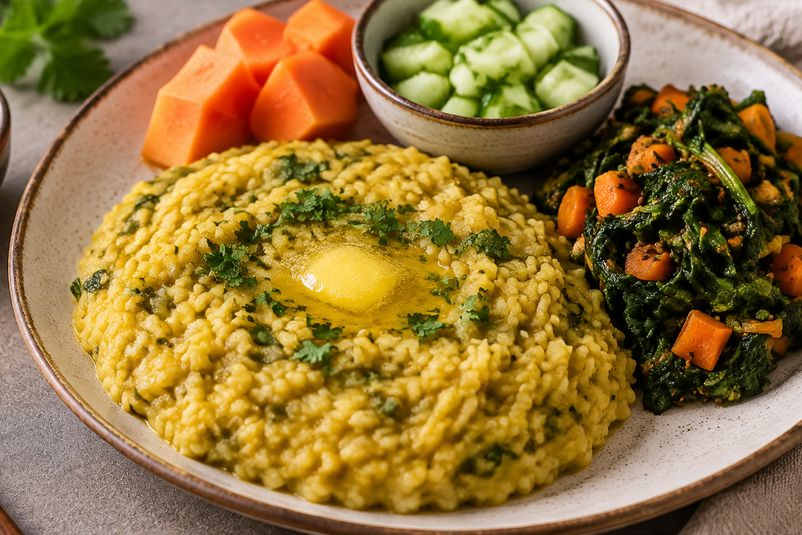
I always find it easier to understand a diet when I see it laid out properly, so here is a full week to help you get started.
Monday
- Morning: Warm turmeric water with lemon
- Breakfast: Moong dal chilla with coconut chutney
- Lunch: Steamed rice, bottle gourd sabzi, fish curry
- Evening: Herbal tea with roasted pumpkin seeds
- Dinner: Khichdi with moong dal, vegetables, and ghee
Tuesday
- Morning: Ginger tea
- Breakfast: Vegetable poha made with rice flakes
- Lunch: Rice, spinach sabzi, grilled chicken
- Evening: Coconut water
- Dinner: Moong dal soup with sauteed carrots and beetroot
Wednesday
- Morning: Warm water with soaked fennel seeds
- Breakfast: Besan chilla with mint chutney
- Lunch: Rice, pumpkin sabzi, egg curry
- Evening: Tulsi tea with a few soaked almonds
- Dinner: Vegetable khichdi with a side of curd if tolerated
Thursday
- Morning: Turmeric water
- Breakfast: Papaya bowl with a sprinkle of cinnamon
- Lunch: Rice, bhindi sabzi, fish curry
- Evening: Roasted pumpkin seeds with herbal tea
- Dinner: Moong dal and lauki curry with ghee rice
Friday
- Morning: Ginger and lemon water
- Breakfast: Moong dal dosa with coconut chutney
- Lunch: Rice, carrot and beans sabzi, chicken curry
- Evening: Coconut water
- Dinner: Khichdi with seasonal vegetables
Saturday
- Morning: Warm turmeric water
- Breakfast: Vegetable stuffed moong dal chilla
- Lunch: Rice, beetroot sabzi, egg curry
- Evening: Herbal tea with pomegranate seeds
- Dinner: Light moong dal soup with steamed vegetables
Sunday
- Morning: Ginger tea
- Breakfast: Banana with a handful of soaked walnuts
- Lunch: Rice, mixed vegetable sabzi, fish curry
- Evening: Coconut water
- Dinner: Khichdi with ghee and sauteed spinach
You do not need to follow this exact plan word for word. Feel free to swap vegetables, proteins, or spices based on what you have at home and what your body responds well to. The idea is to keep meals simple, freshly cooked, and free from the trigger foods while still feeling satisfying.
If you are still not sure where to start, or if you want a plan tailored to your specific condition and lifestyle, book an appointment with me and let us work out an autoimmune diet plan that actually fits your kitchen, your routine, and your body.
What Drink Is Good for Autoimmune Disease?
This is one of the most common questions I get asked, so let me answer it properly.
Some of the best drinks for people managing autoimmune conditions include:
- Warm turmeric water, which has natural anti inflammatory properties
- Ginger tea, which helps with digestion and reduces bloating
- Bone broth or vegetable broth, gentle on the gut and rich in nutrients
- Coconut water, a good source of natural electrolytes
- Herbal teas like chamomile or tulsi, which help calm the body
I would avoid excess caffeine and sugary drinks during the strict elimination phase since they can add to inflammation rather than reduce it.
Keeping blood sugar stable matters just as much for inflammation control, so if you want a deeper breakdown of what to eat and avoid, my Sugar Patient Diet Chart covers that in detail.
Common Challenges Indians Face With This Diet
I would be lying if I said this diet is easy to follow in a typical Indian household. Some real challenges include:
- Festivals and family gatherings where sweets and fried food are everywhere
- Shared kitchens where it is hard to cook separately for one person
- Confusion around whether ghee, curd, or certain lentils are allowed
- Missing the taste of tomato and chili based curries
Here is how you can work around each of these:
| Challenge | How to Overcome It? |
|---|---|
| Festivals and family gatherings | Eat a small filling meal before you go, carry a homemade snack, and allow yourself the occasional treat without guilt |
| Shared kitchens | Cook simple base dishes like plain rice and dal for everyone, then add your own vegetables and spices separately for your portion |
| Confusion around ghee, curd, and lentils | Start with a short trial. Remove them for two weeks, then reintroduce one at a time and notice how your body responds |
| Missing tomato and chili based flavors | Use tamarind, beetroot, or amchur for tang, and rely on ginger, cumin, and coriander for depth of flavor instead of chili |
My honest advice is to not aim for perfection. Even following this diet 80 percent of the time can bring noticeable relief. Small consistent changes matter more than short bursts of strict discipline followed by giving up entirely.
This is actually one of the biggest reasons diets do not work long term. If you want to understand the common mistakes people make and how to avoid them, I have written about it in detail in Why most diets fail and how to make yours work.
Tips to Make This Diet Sustainable
Following an autoimmune diet is not just about knowing what to eat, it is also about building small habits that keep you consistent over time. Here are a few that have genuinely helped people stick with it.
- Batch cook simple meals: Prepare dal and vegetable dishes for the whole week so you are not scrambling to cook something suitable every single day
- Keep herbal essentials ready at home: Stock up on ginger, tulsi, and turmeric so a supportive drink is always just a few minutes away
- Communicate with your family: Explain your food choices to the people you cook and eat with so meal times feel less like a conflict
- Reintroduce foods slowly and track them: Keep a simple diary noting how you feel after adding back each food, this makes patterns much easier to spot
- Get proper guidance before starting: Speak with a dietitian or doctor, especially if you are on medication, so the diet supports your treatment rather than working against it
Final Thoughts
An autoimmune diet plan for Indians does not need to feel like a punishment. It is really about listening to your body and giving it the ingredients that help rather than hurt. Our kitchens already have so many healing foods built into daily cooking, from turmeric to ghee to fresh seasonal vegetables. The trick is knowing what to reduce during a flare and how to bring things back slowly.
If you are dealing with an autoimmune condition, please remember that this diet works best alongside proper medical guidance, not as a replacement for it. Food can support healing, but it should go hand in hand with the right treatment plan for your specific condition.
Beyond autoimmune conditions, I also work with clients on weight loss, weight gain, PCOD, thyroid, diabetes management, and pre and post pregnancy nutrition, among several other health programs, since so many of these issues are connected through the same underlying inflammation and gut health.
If you would like personalised guidance on building an autoimmune diet plan around your condition and your kitchen, book an appointment with me. I would be glad to help you figure out what truly works for you.
Frequently Asked Questions (FAQs)
Question: Can autoimmune disease be cured with diet alone?
Answer: No, diet does not cure autoimmune disease. It can help manage inflammation and reduce flare ups, but it should always work alongside proper medical treatment.
Question: How long does it take to see results on an autoimmune diet?
Answer: Some people notice changes in digestion and energy within a couple of weeks, while others may need a few months. It really depends on the individual and how consistently the plan is followed.
Question: Is the autoimmune diet safe for the Indian climate and lifestyle?
Answer: Yes, it can be adapted well to Indian food habits by focusing on seasonal vegetables, traditional spices like turmeric and ginger, and simple home cooked meals instead of imported or processed ingredients.
Question: What breakfast is good for autoimmune disease?
Answer: Simple, freshly made options like moong dal chilla, vegetable poha, or a bowl of papaya work well. The idea is to keep breakfast light, home cooked, and free from refined flour or excess sugar.
Question: Do I need to follow an autoimmune diet for life?
Answer: Not necessarily. Many people follow the strict elimination phase for a few weeks to months, then settle into a more relaxed, personalised version once they know which foods work for their body.
Tapasya Mundhra is a Clinical Dietitian and Wellness Consultant based in India, specializing in Nutrition for Weight Loss, Detox Diets, and Stress Management. With over 13 years of experience, she helps clients optimize their physical and mental well-being through personalized diet plans, moderate workouts, and holistic health strategies. Trusted by countless clients, she is dedicated to achieving sustainable health goals.