

Butterflies in the stomach before an interview, losing your appetite during a stressful week, or feeling low after days of eating junk. None of this is random. These are signs of the brain gut connection, a two way link between your digestive system and your mind.
I’m Tapasya Mundhra , a Delhi based dietitian and holistic health coach, and food is the part of this link I work with every day. What goes on your plate shapes how your gut feels, and your gut has a strong say in how your mind feels.
So before we get to the foods that help and the ones that hurt, let’s understand what this connection really is and how it works inside your body.
What Is the Gut Brain Connection?
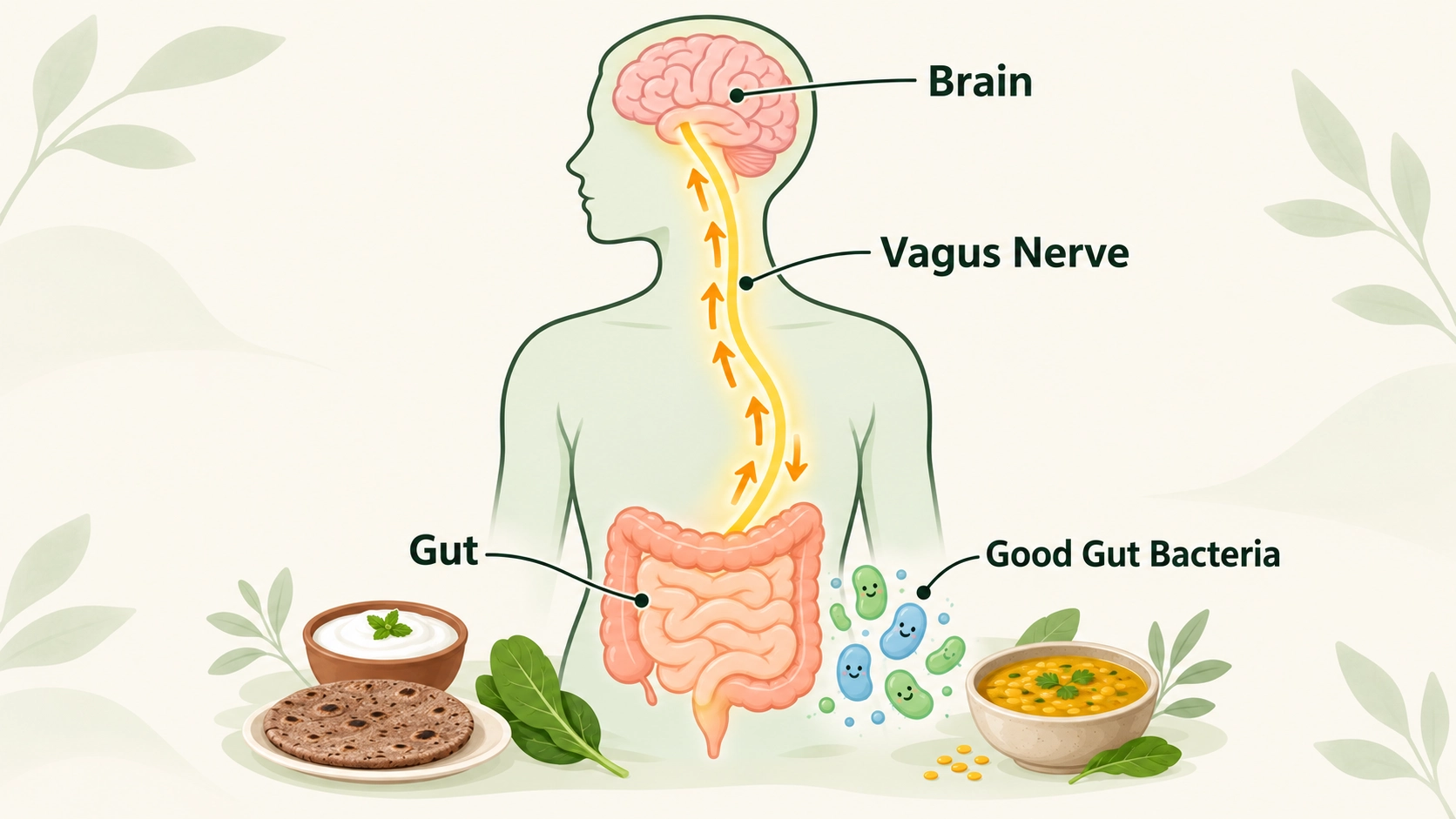
The gut brain connection is the constant communication between your digestive system and your brain. Doctors and researchers also call it the gut brain axis. Your gut has its own network of nerves, so large that it is often called the second brain, and it keeps sending messages upward all day.
These messages are not only about hunger. They also carry information about inflammation, stress and comfort. When the gut is calm and well fed, the brain gets calm signals. When the gut is irritated, the brain picks up on that too.
How the Gut and Brain Talk Through the Vagus Nerve
The vagus nerve is the main phone line between the two. It runs from the brain stem down to the abdomen, and carries messages in both directions. Most of its fibres send signals from the gut up to the brain, while the rest.
Gut bacteria also take part in this conversation. They break down fibre from your food and produce substances that affect inflammation and the chemical messengers linked to mood. So the food you eat feeds not just you but also these bacteria, and their health shows up in how you feel.
Why Gut Health and Mental Health in India Need More Attention
In many Indian families, anxiety is still brushed off as overthinking, and acidity is treated with an antacid and forgotten. We rarely connect the two. But the gut and brain connection means a stomach that is always upset and a mind that is always restless can be part of the same problem.
Our food habits have changed too. Packaged snacks, late dinners, endless cups of chai and skipped breakfasts have become normal in cities. A practical diet for anxiety India can actually follow has to be built around dal, roti, sabzi and dahi, not a foreign meal plan full of ingredients we never buy.
How Your Gut Affects Anxiety and Mood
Your gut does not decide your mood alone, but it has a strong say in it. Here are the main ways it works.
The Role of Serotonin Made in the Gut
Serotonin is the chemical often linked with feeling calm and content. What surprises many people is where it is made. Research published in the journal Cell found that more than 90% of the body’s serotonin is made in the gut , and that gut bacteria help control how much is produced.
This serotonin does not travel straight to the brain. It mainly works in the gut, managing digestion and bowel movements. But a gut that works smoothly sends better signals along the gut brain axis, and that does reflect in your mood.
How Stress Disturbs Digestion
The link runs both ways. When you are stressed, your body shifts into alert mode. Blood flow moves away from digestion, food moves either too slowly or too fast, and the stomach becomes more sensitive. This is why exam stress brings loose motions for some people and constipation for others.
Long periods of stress can also reduce the good bacteria in your gut and make room for the ones linked to inflammation. A disturbed gut then sends unsettled signals back to the brain, and the cycle continues. This is the brain-gut connection anxiety loop that many people get stuck in without realising it.
Best Foods for Mental Health in India
You do not need imported superfoods for a happy gut. Some of the best options are already sitting in an Indian kitchen.
Probiotic Foods in India: Dahi, Chaas, Kanji and Achar
Probiotic foods carry live good bacteria that support your gut. Homemade dahi is the easiest one to start with, and a bowl with lunch is enough for most people. Chaas with a pinch of roasted jeera and black salt works well after meals, especially in summer. In my practice, chaas is one of the simplest swaps people make, and many are surprised by how much lighter their afternoons feel.
Kanji, the fermented black carrot drink made in North Indian homes during winter, is another excellent choice. Traditional achar fermented in sunlight, not the vinegar heavy packaged kind, can also add good bacteria. Keep the portion small because of the salt and oil.
Fermented Foods: Idli, Dosa and Dhokla
Batters left to ferment overnight, like idli, dosa and dhokla, are easier to digest because fermentation partly breaks down the food before it reaches your stomach. Cooking kills most of the live bacteria, but these foods are still gentle on the gut and make a good light breakfast.
Millets Like Ragi, Jowar and Bajra
Millets are rich in fibre, and fibre is food for your gut bacteria. Ragi also gives calcium, while jowar and bajra keep you full for longer and help prevent sharp blood sugar drops. Those drops often show up as irritability and sudden restlessness. Start by swapping one wheat roti a day with a millet roti.
Mood Boosting Foods in India: Amla, Haldi Doodh and Flaxseeds
Amla is one of the richest sources of vitamin C and supports overall immunity, which matters more when stress is high. A glass of warm haldi doodh at night is comforting and helps many people unwind before sleep. Flaxseeds, or alsi, give plant based omega 3 fats that support brain health. Roast and grind them, then add a spoon to your atta, dahi or smoothie.
Other easy additions include a handful of walnuts, bananas, seasonal green leafy vegetables, and dals, which give the protein your body uses to make mood related chemicals.
For a full list of everyday Indian foods that help calm stress , you can read my detailed food guide.
Foods That Can Make Anxiety Worse
Some foods are fine in small amounts but can push an anxious mind further when they become a daily habit.
Too Much Chai and Coffee
Caffeine raises your heart rate and keeps the body on alert. For someone already prone to anxiety, four or five cups of strong chai a day can mean shaky hands, a racing heart and poor sleep. Chai on an empty stomach also triggers acidity for many people. Keep it to two cups, have them after a meal, and avoid caffeine after 4 pm.
Sugar and Fried Snacks
Sweets, biscuits and sugary drinks cause a quick rise in blood sugar followed by a crash, which can leave you irritable and restless. Samosas, pakoras and namkeen made in reused oil are heavy on the gut and slow down digestion. You can see how everyday options compare in my guide on healthy and unhealthy Indian foods .
Highly Processed Packaged Foods
Instant noodles, packaged chips and ready to eat meals are low in fibre and high in salt, sugar and additives. They give your gut bacteria very little to work with. Diets full of refined sugar and processed food are linked with fewer kinds of good gut bacteria and more inflammation in the body. When they replace home cooked meals often, the gut gets less of what it needs, and that shows up in both digestion and mood.
Simple Indian Diet for Anxiety: A Sample Day
A good diet for anxiety India style does not need fancy ingredients. Here is an easy day of eating that supports both your gut and your mood. Treat it as a starting point, because portions and choices change with age, health conditions and routine.
Breakfast
- On waking: a glass of lukewarm water, then 4 to 5 soaked almonds and 2 walnuts
- Breakfast: vegetable poha with peanuts, 2 idlis with sambar, or a moong dal chilla with mint chutney
- Chai or coffee after breakfast, not before
Lunch
- 1 millet roti and 1 wheat roti, or a small bowl of rice
- A bowl of dal or rajma
- A seasonal sabzi, ideally a green one
- A bowl of homemade dahi and a plate of salad
Evening Snack
- A glass of chaas, or a fruit like banana, guava or apple
- Roasted chana or makhana in place of biscuits and namkeen
Dinner
- Light and early, ideally by 8 pm
- Vegetable khichdi with a spoon of ghee, or roti with paneer bhurji and a sabzi
- A small cup of warm haldi doodh about an hour before bed, if it suits you
Wherever you can, pick sabzi and fruits that are in season, and if you want to know why that matters, read my guide on power of seasonal eating .

Daily Habits That Support Your Gut and Mood
Food works best when your daily routine supports it.
Eating on Time
Long gaps between meals and very late dinners confuse the gut. Try to eat at roughly the same times every day. Your digestion settles into a rhythm, blood sugar stays steadier, and your mood tends to follow. Clients are often surprised by how much a fixed dinner time alone improves their sleep and morning digestion.
If your work keeps you up late, these tips on eating well with a late night schedule can help you keep your meals on track.
Sleep and Stress Management
Poor sleep makes the gut more sensitive and the mind more anxious. Aim for 7 to 8 hours. Simple practices like a 10 minute walk after dinner, slow deep breathing, or a few minutes of pranayama before bed help calm the nervous system, and a calmer nervous system means a calmer gut.
Staying Hydrated and Active
Water helps fibre move through the gut and prevents constipation. Most adults do well with 8 to 10 glasses a day, and more during Delhi summers. Regular movement, even a brisk 30 minute walk, supports digestion and lifts your mood at the same time.
When to See a Gut Health Dietitian in Delhi
Small food changes help most people, but some situations need a closer look.
Signs You Need Expert Help
- Acidity, bloating or gas on most days of the week
- Constipation or loose motions that keep coming back
- Anxiety that rises along with stomach trouble
- Strong cravings or loss of appetite during stressful phases
- Digestive issues alongside PCOD, thyroid or diabetes
If these sound familiar, a gut health dietitian in Delhi can help you find what is actually causing the problem instead of trying one remedy after another. If your anxiety is severe or affecting your daily life, please also speak to a doctor or mental health professional. Diet supports treatment, but it does not replace it.
How a Dietitian for Anxiety in Delhi Creates Your Diet Plan
At my clinic in Nizamuddin East, the first step is understanding your eating habits, work routine, sleep, stress levels and medical history. Basic reports like blood sugar, thyroid and vitamin levels help complete the picture.
From there, the plan is built around food you already enjoy, with changes added slowly so your gut can adjust. Progress is reviewed every two weeks, and the plan is updated based on how your digestion and mood respond. You can choose an offline consultation at the clinic or an online consultation from home, so distance does not have to be a barrier.
Conclusion
Your gut and your mind are not separate departments. Every meal sends a message along the brain gut connection, and over time those messages shape how calm, focused or restless you feel. Simple choices like a bowl of dahi, a millet roti, fewer cups of chai and a fixed dinner time can slowly change that message.
There is no need to overhaul everything at once. Pick two changes from this guide, follow them for a few weeks, and notice how your digestion and mood respond. Caring for the gut and brain connection works through consistency, not perfection.
Ready to feel lighter in the stomach and steadier in the mind? Reserve your consultation with me and let’s build a plan that works for your gut and your mood.
Frequently Asked Questions (FAQs)
Question: What is the best Indian diet for anxiety?
Answer: Regular home cooked meals with dal, seasonal sabzi, millets, dahi and fruits, along with less sugar, fried snacks and caffeine. Eating on time and including some protein at every meal helps keep both blood sugar and mood steady.
Question: Which probiotic foods are easily available in India?
Answer: Dahi, chaas, kanji and homemade fermented achar are the most common. Fermented batters like idli, dosa and dhokla are also gentle on the gut. Packaged probiotic drinks are available too, but check the label for added sugar.
Question: Is chai bad for anxiety?
Answer: Not in moderation. Two cups after meals are fine for most people. Too much chai, especially on an empty stomach, can increase restlessness, acidity and sleep trouble.
Question: Can skipping meals affect my mood?
Answer: Yes. Long gaps between meals can drop your blood sugar, which often shows up as irritability, shakiness and poor focus. Eating every 3 to 4 hours keeps your energy and mood more stable.
Question: Can improving gut health cure anxiety?
Answer: Improving gut health can support your mood and reduce some physical symptoms that feed anxiety, but it is not a cure. The brain gut connection is one piece of the puzzle, along with sleep, stress, therapy and medical care when needed.

Tapasya Mundhra is a Clinical Dietitian and Wellness Consultant based in India, specializing in Nutrition for Weight Loss, Detox Diets, and Stress Management. With over 13 years of experience, she helps clients optimize their physical and mental well-being through personalized diet plans, moderate workouts, and holistic health strategies. Trusted by countless clients, she is dedicated to achieving sustainable health goals.